

Page path:
Youth and Youthwork – Chicago meets Augsburg
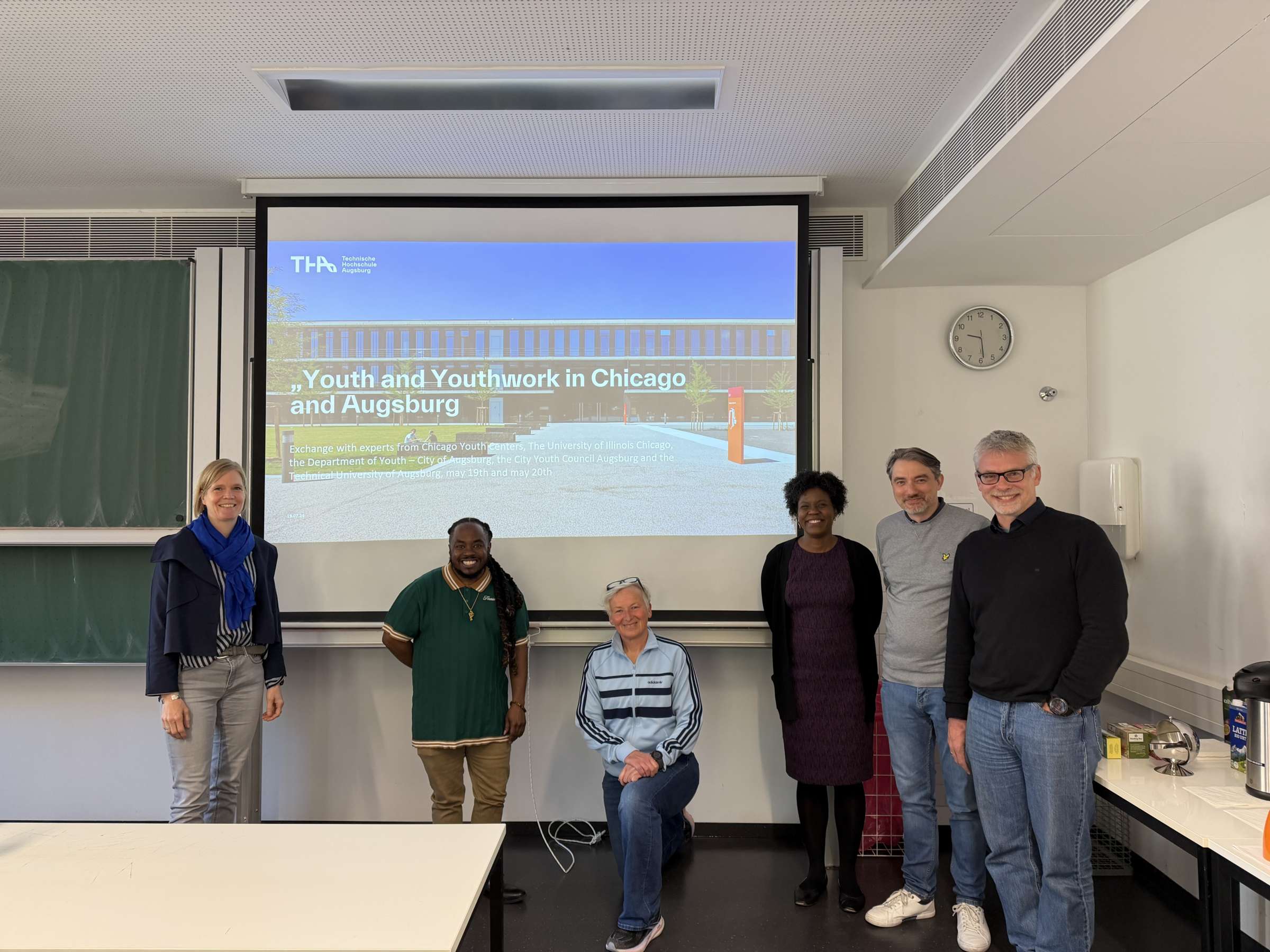
Binational Academic and Professional Exchange on Youth and Youth Work at THA

Jun 15, 2026
Augsburg/Chicago
Chicago is considered one of the birthplaces of community work – shaped by Jane Addams and Hull House – and therefore holds special historical significance for social work. At the same time, the third-largest city in the U.S. is still marked by socioeconomic segregation. “A central goal of the exchange was to give students and professionals insight into the living conditions of young people and youth work in Chicago, while engaging in dialogue about similarities and differences with youth work in Germany, and specifically in Augsburg. Recognizing the structures, challenges, and strengths of one’s own practice in the mirror of the other allows for a broadening of perspective,” said Barbara Rink.
Youth and Social Inequality
To begin, Professor Barbara Rink introduced the concept of youth as a distinct and formative phase in a person’s life. The period between approximately 12 and 21 years of age is characterized by intense biological, psychological, and cognitive developmental processes. It is also accompanied by high societal expectations. From the perspective of socialization theory according to Hurrelmann and Quenzel (2022), these are expressed in what are known as “developmental tasks”. The focus is on the development of one’s own personality as well as a social identity.
Youth in Germany and the United States is characterized by diversity, which manifests itself, for example, in socioeconomic background and health status, as well as in differing interests, needs, and worldviews. Furthermore, opportunities for young people are unevenly distributed; social inequality has a massive impact on young people during this phase. It influences how they navigate adolescence and to what extent they succeed in meeting societal expectations, such as completing school and obtaining initial vocational qualifications. Most recently, the UNICEF Innocenti Report Card 20, “Unequal Chances. Children and Economic Inequality” (May 2026), once again demonstrates – according to Prof. Rink – that there is a correlation between a household’s income or socioeconomic status and the educational success or health status of children and adolescents. This applies to both Germany and the United States.
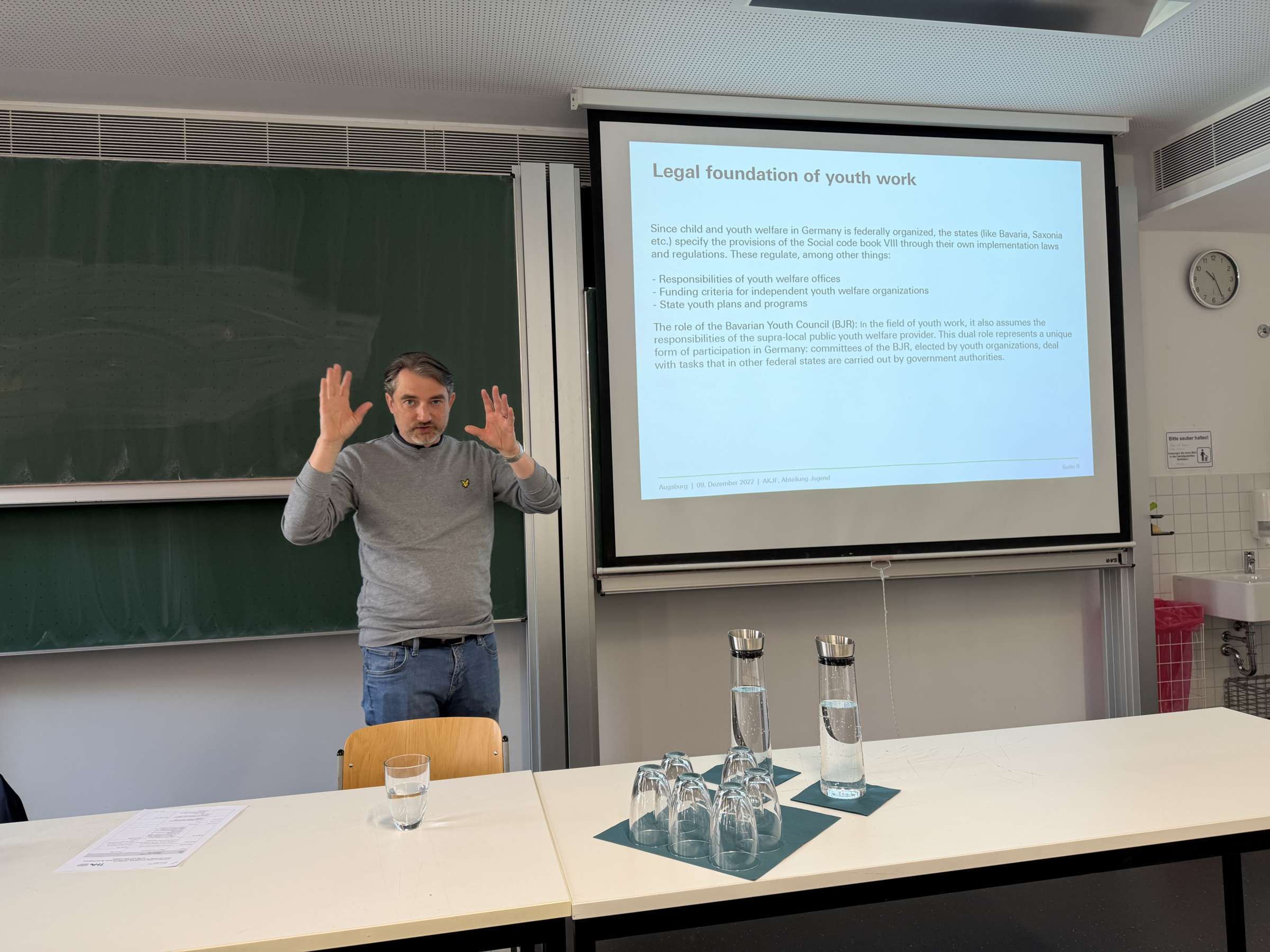
Youth work in Chicago and open youth work in Augsburg are targeted approaches designed to promote and support young people in their development. Dennis Galanti (Head of the Youth Department, Office for Children, Youth, and Family of the City of Augsburg – AKJF), provided an introduction to the social and political context of youth work in Germany and highlighted that the support of young people is enshrined in law both in the Child and Youth Empowerment Act and in SGB VIII, but also that the UN Convention on the Rights of the Child, signed by Germany, grants young people a right to participation in terms of access to education as well as participation in the sense of co-determination. Thus, the guests from Chicago and the students learned that the municipal level in Germany is one of the central levels for implementing laws and agreements. Dennis Galanti discussed the steering and oversight functions of the AKJF and, at the same time, the necessity of cooperation with independent organizations such as the City Youth Council of Augsburg (Stadtjugendring Augsburg), which, among others, is responsible for operational implementation. He also provided insight into the financing of open youth work.
Youth Work and Positive Youth Development
Aisha Griffith, a professor at the University of Illinois Chicago, shared insights with THA guests and students about the living conditions of young people in Chicago. She presented the “Positive Youth Development” approach, which focuses in particular on building trust, fostering relationships, and strengthening individual resources. In her research, Prof. Griffith examines, among other things, the importance of trust between professionals and young people. This trust forms the foundation for successful support processes and sustainable development.
Practical Experiences
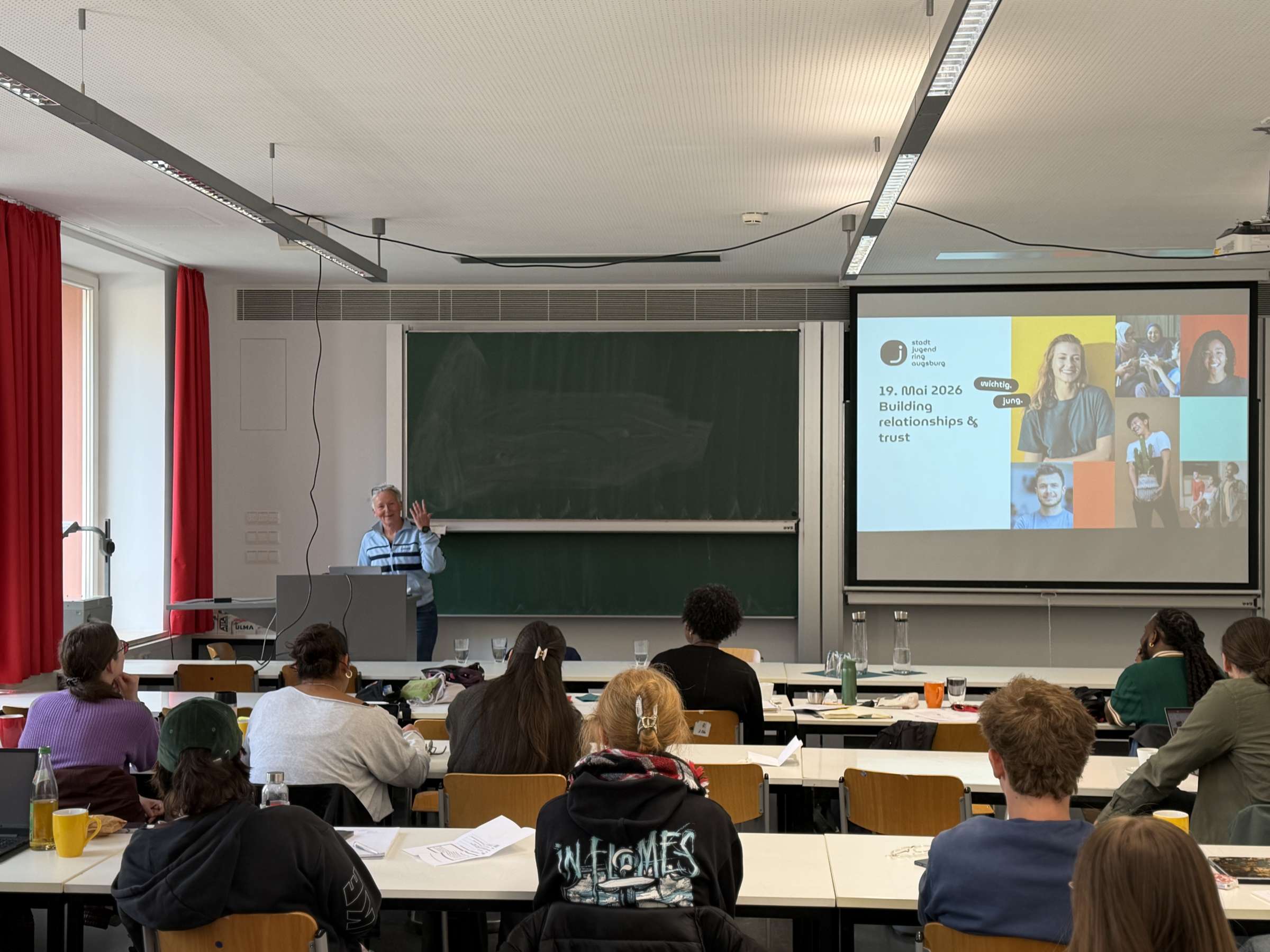
In the following, Devin Swift, a youth worker at the Chicago Youth Center, and Tanja Friedrich, Regional Director for Western Germany at Outreach Youth Work (Offene Jugendarbeit – Stadtjugendring Augsburg), drew on their practical experience to illustrate how trust-building and professional relationship-building are actually implemented on the ground at their respective youth centers. Despite differing structural conditions, many similarities emerged – interacting with young people as equals and authenticity in dealing with them are just two examples.
Comparative Study: Chicago Youth Centers and City Youth Council of Augsburg (Stadtjugendring Augsburg)
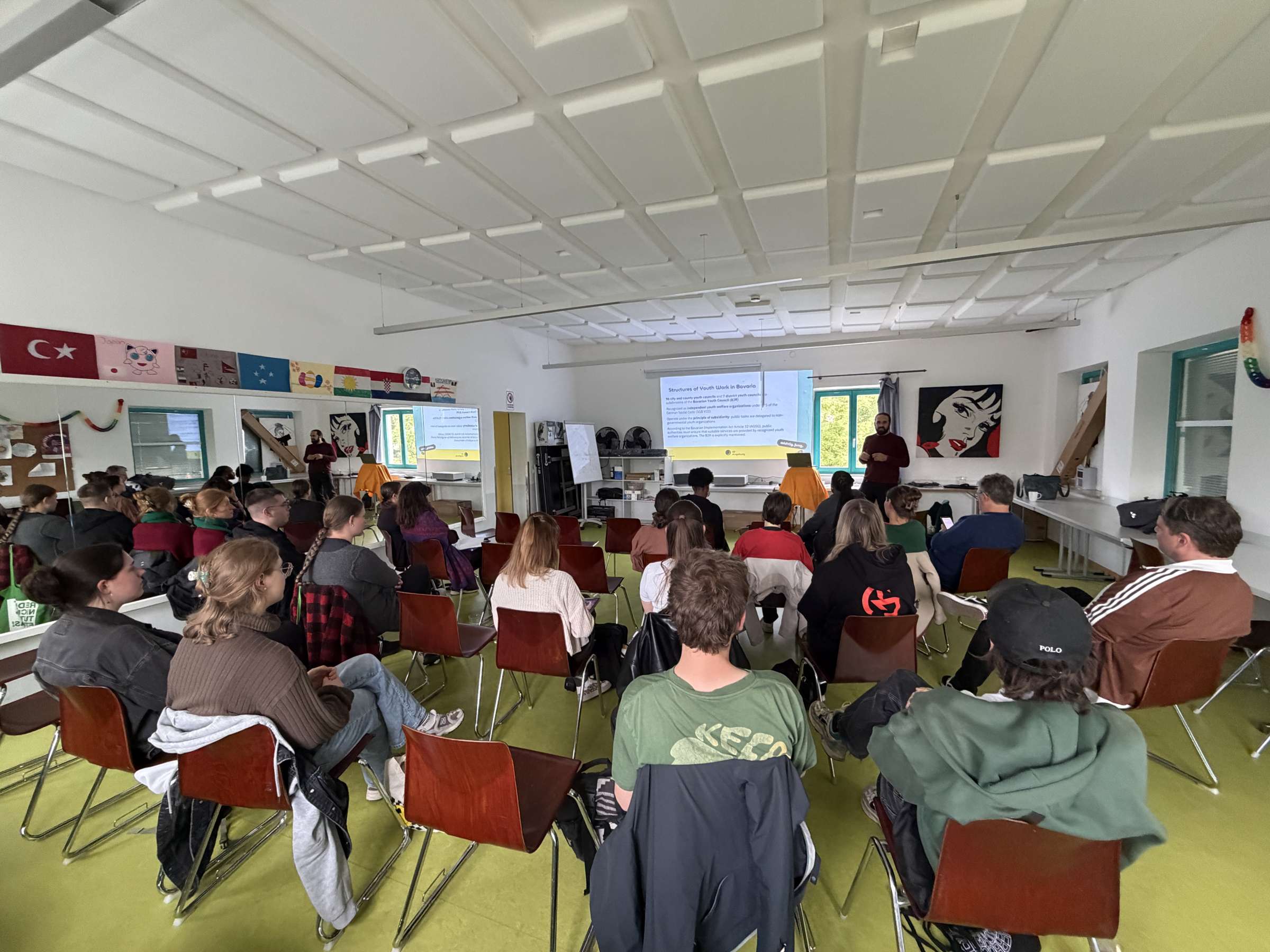
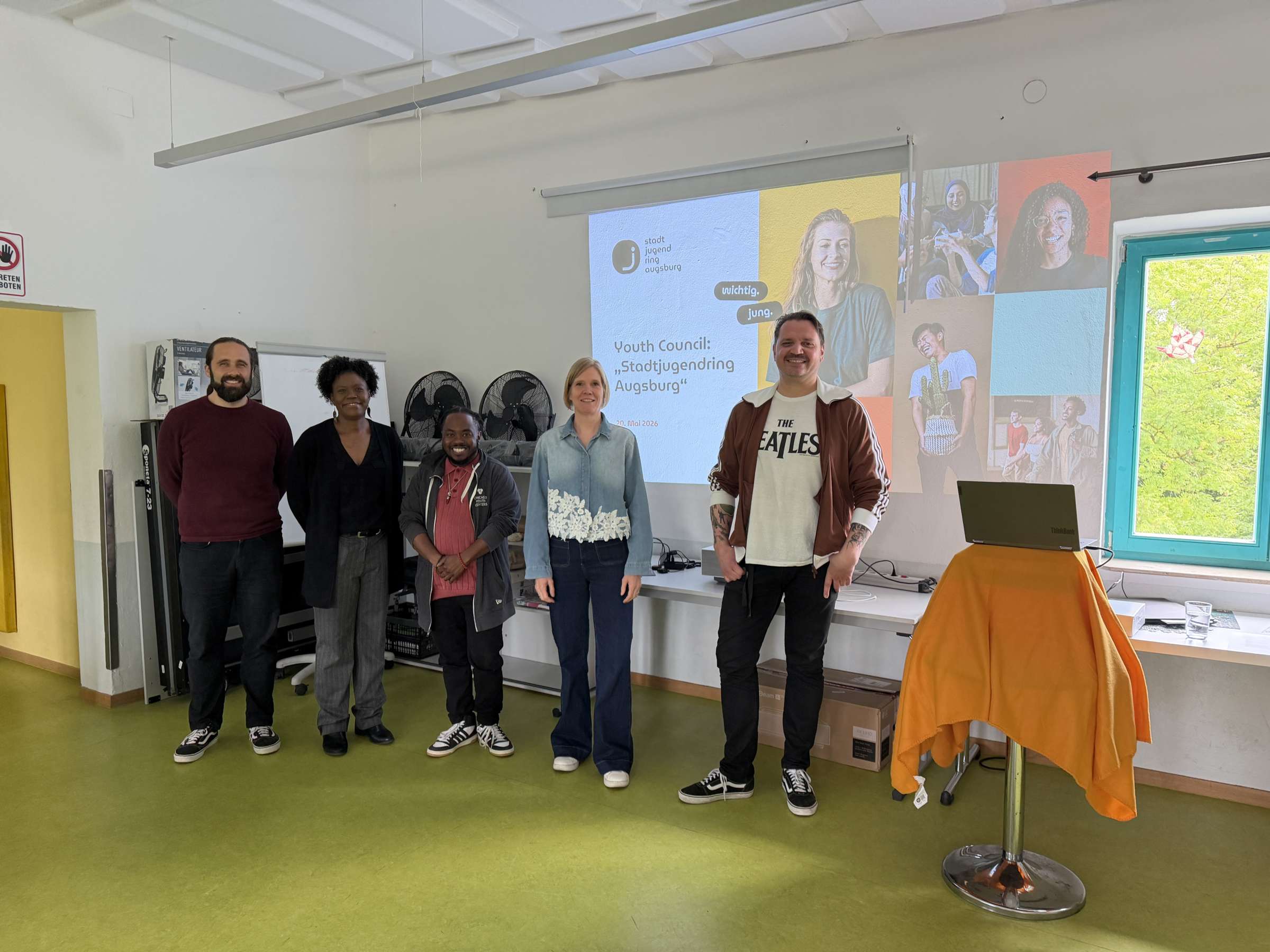
On the second day, the expert exchange took place at a center for open youth work – the factory (fabrik) youth center in Lechhausen (Stadtjugendring Augsburg). This gave the students and experts from Chicago the opportunity not only to engage with the topic of (open) youth work through presentations and discussions, but also to gain direct insight on-site. Dominik Rankl, Head of Open Youth Work at the SJR, first outlined the structure of the Stadtjugendring and explained the unique role of youth rings in Bavaria. Markus Neumann, Regional Director for the East and also Director of the fabrik youth center, provided information on the principles of open youth work and its practical implementation on-site.
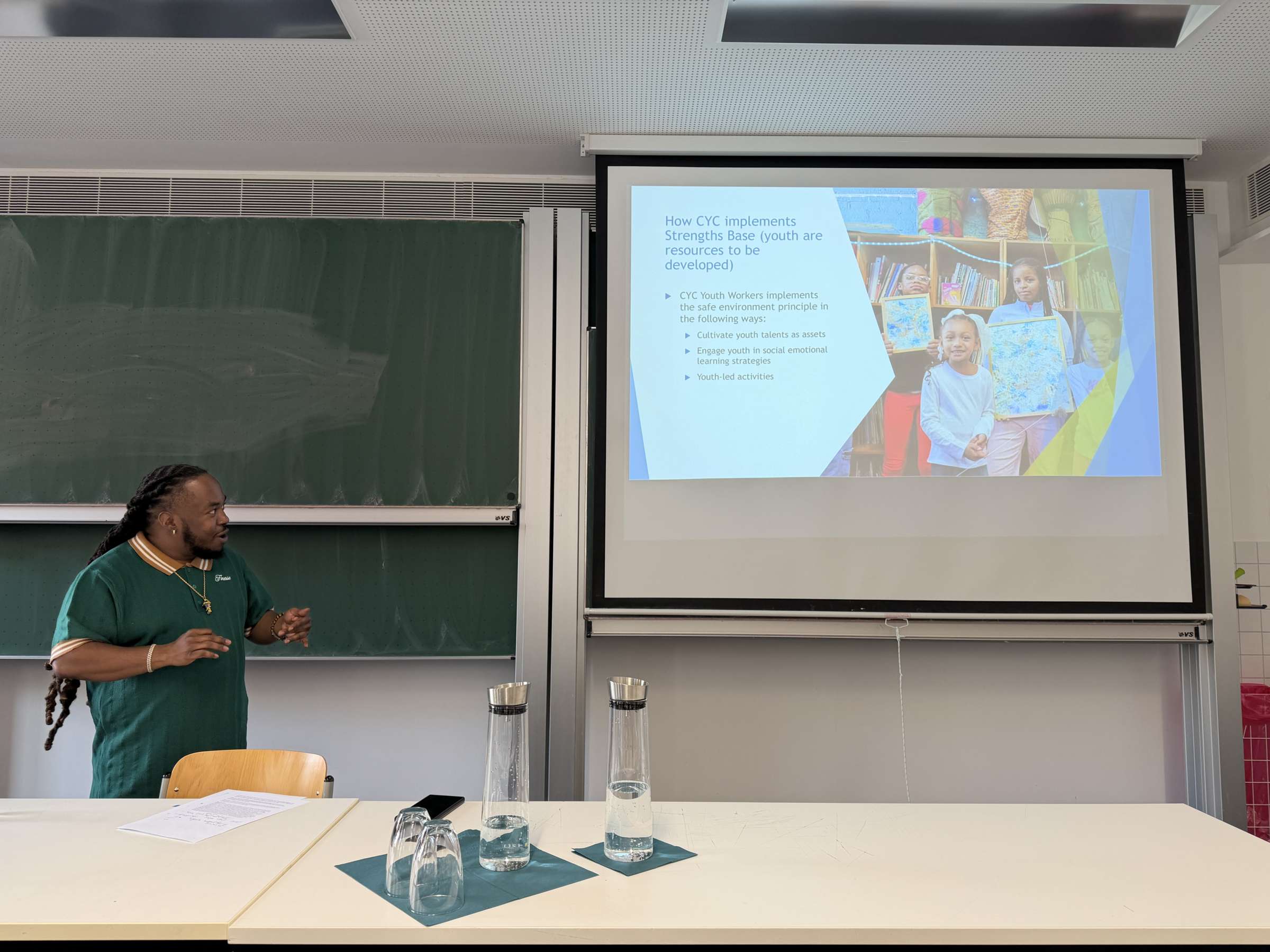
Also joining the event remotely were Tina Ayala (President & CEO of Chicago Youth Centers) and Piotr Lewicki (Director of Continuous Improvement at CYC / Youth Services). The participants learned about the structure of Chicago Youth Centers (CYC) and their importance, particularly for young people living in neighborhoods more severely affected by poverty and unemployment. Unlike in Germany, a significant portion of the organization’s funding there comes from donations and sponsorships. Following the introduction to the organizational framework, Devin Swift presented the various services and programs offered by CYC. It came as a surprise to the students and professionals that “Chicago Youth Centers” not only provides youth services but also begins with early childhood education, supports participants through young adulthood, and offers educational support in addition to youth services. In the Augsburg youth centers, the focus is on open youth work, and in some cases, programs are also offered as part of all-day education.
Devin Swift’s key insight was: “Despite the time difference and the structural differences between Chicago and Augsburg, the conversations I had with SJR staff made it clear that what truly connects us is our shared passion for youth development and our commitment to helping young people become their best selves. That alignment was evident in the youth workers and the leadership. Whether it’s providing youth with a meal and engaging in family‑style dining, elevating youth voice to strengthen programming, or giving young people the skills and space to lead and organize projects, both of our cities are working toward the same goals.”
Dominik Rankl’s main takeaway from the discussion is “that the structural conditions for funding youth work vary greatly and each has its own advantages and disadvantages. While it is much easier in the U.S. to raise significant funds through personal donations and sponsorships, we in Germany benefit from the fact that youth work is generally reliably funded by the government – even if the funding is not always sufficient.”
International Perspectives Broaden Horizons
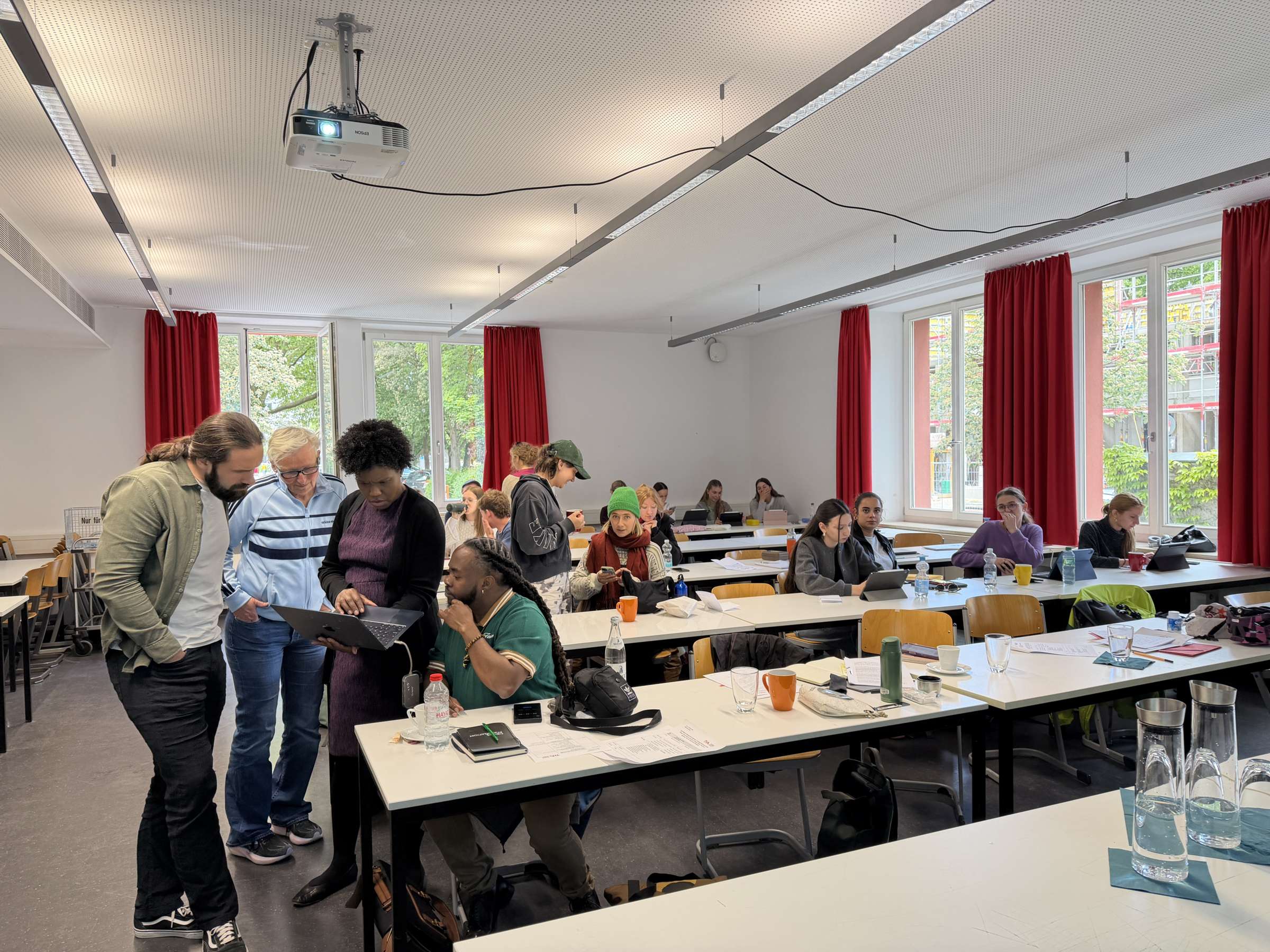
The exchange between Chicago and Augsburg demonstrates just how beneficial international collaborations can be in education. Students gained not only theoretical insights but also practical insights into different youth welfare systems. This exposure to “the other” allowed them to reflect anew on their own structures, strengths, and challenges. International networking, academic discourse, and practical engagement – the “Chicago meets Augsburg” exchange combines all these dimensions and strengthens the training of future social work professionals.
Aisha Griffith describes her experience as follows: “It was important to me to learn more about youth development beyond the U.S. In my research, I focus a lot about teens and the adults who make their lives better, but I did not know the full picture because I was limited in what that looks like in the U.S. Now, I can bring this knowledge to my students. I hope that I can include one week in my class in the Fall where we think about youth development more broadly in terms of the open youth work and social codes piece. I have a few takeaways for me: in general, it was amazing being in space with your students, at the centers, and in the City Children, Youth and Family Office. I learned that funding structures and political structures matter for supporting the people doing the important work with our youth. Seeing how this plays out internationally is important for envisioning new possibilities. Finally, youth voice and youth participation in decisions is powerful not just for young people but for the rest of society.”
Devin Swift sums up his experience as follows: “For me, participating in the exchange was important because I’ve always been curious about what youth development – especially after‑school programming – looks like outside of the United States. I was excited for the opportunity to visit a youth center in another country, and I felt humbled and grateful to be considered a ’practicing expert’ in the field and to share my lived experience. I look forward to our continued cooperation.”
Dennis Galanti also views the exchange very positively: “The exchange with the City of Chicago has really shown me just how diverse and innovative youth work can be on an international level. I found the comparison of different approaches to implementation and funding, as well as the scientifically grounded perspective from the U.S., particularly valuable. The insights gained offer important inspiration for the field. At the same time, it was a great pleasure for me to be able to actively support this exchange here with a presentation of my own.”
For Dominik Rankl, this exchange raises awareness of new, sometimes seemingly simple practical solutions and reinforces the conviction that building strong relationships, fostering trust, and focusing on the people behind the programs are the key elements of successful youth work – alongside youth participation. In addition, international relationships are formed that could lead to further joint projects in the future.
Everyone agrees that the cooperation will continue, including Tina Ayala (President and CEO of CYC): „Chicago Youth Centers is excited to continue our international exchange program with Technical University of Applied Sciences Augsburg. This exchange has allowed our staff to explore the differences and similarities of youth work and social work across the world. We have learned so much from this rich cultural exchange.“
Academic Presentation to Conclude the Visit
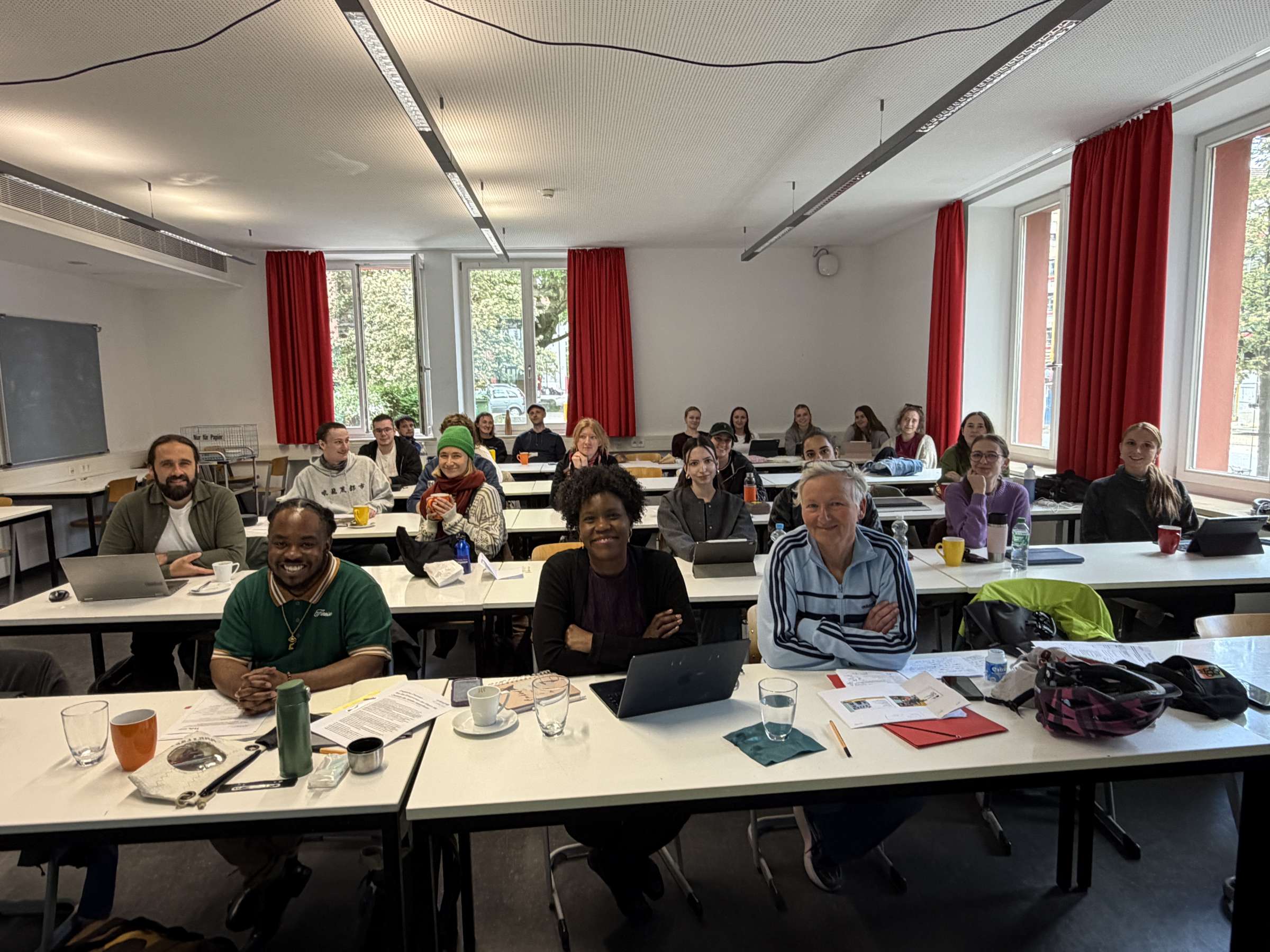
In addition to this academic exchange, the visit to THA concluded with a lecture by Prof. Griffith on the topic “The Black Girl RISES Project: Centering Black Adolescent Girls’ Voices on School Staff’s Differential Treatment in the U.S.” as part of a course taught by Prof. Clarissa von Drygalski in the Social Work program at THA. The lecture addressed the unequal treatment of Black adolescent girls in the U.S.
Further information
Hurrelmann, K., & Quenzel, G. (2022). Lebensphase Jugend. Eine Einführung in die sozialwissenschaftliche Jugendforschung (14. Aufl.) Juventaverlag.
UNICEF Office of Strategy and Evidence – Innocenti (2026). Unequal chances: Children and economic inequality, Innocenti Report Card 20. Download: https://www.unicef.org/innocenti/media/8521/file/UNICEF-Innocenti-Report-Card-20-2026.pdf
UNICEF (2026). Ungleiche Chancen – Wie das Einkommen der Eltern die Chancen der Kinder beeinflusst. Eine Studie des UNICEF-Forschungsinstituts Innocent. Deutsche Zusammenfassung der Report Card 20. Download: https://www.unicef.de/informieren/materialien/empfehlungen-kindliches-wohlbefinden/397604
The Partners
Stadtverwaltung Augsburg | |
Amt für Kinder, Jugend und Familie | |
University of Illinois Chicago | |
Stadtjugendring Augsburg (SJR) | |
Chicago Youth Centers | |
Contact
Phone: | +49 821 5586-3650 |