Creative Engineering (B.A./B.Eng.)
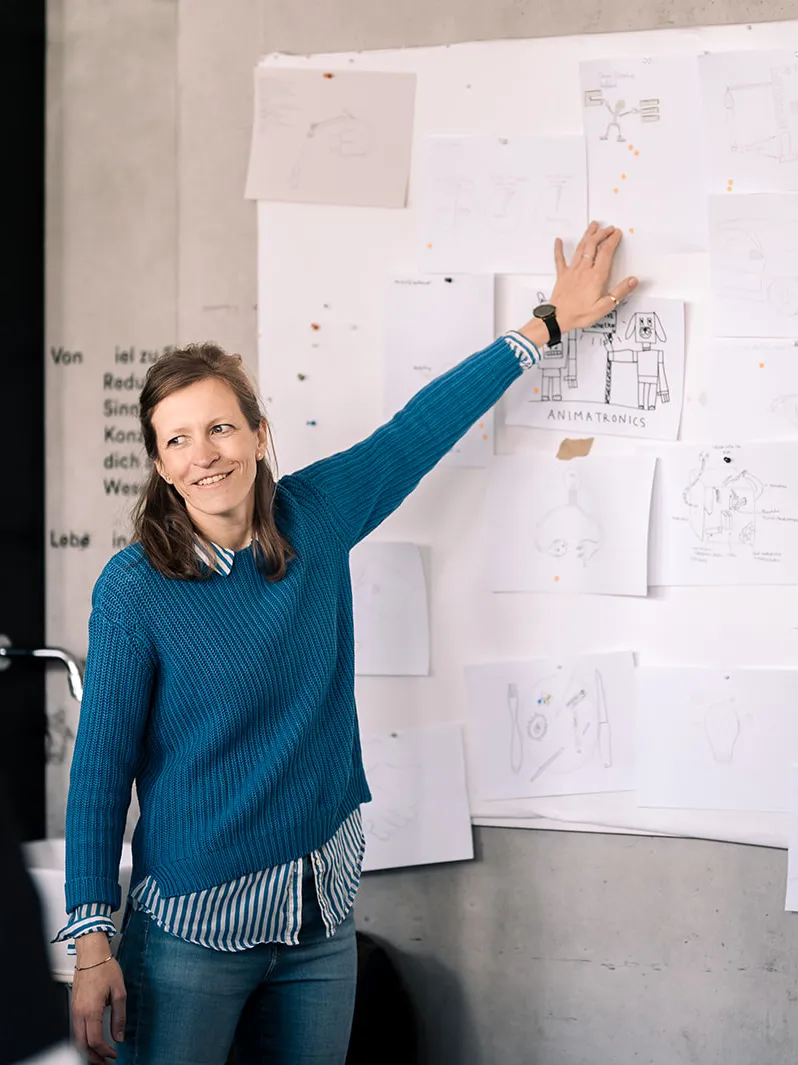
Technical systems are increasingly permeating our personal and professional lives. To address future societal challenges, their design must increasingly take into account aspects of safety, environmental sustainability, and societal acceptance. This requires an educational program that is grounded in human needs and abilities and leads to innovative solutions.
The Creative Engineering program offers creative and technically gifted applicants an interdisciplinary curriculum tailored to design-driven innovation. Students acquire both a solid foundation in engineering and design as well as the ability to reflect on and design technical systems within a societal context. This is particularly necessary to meet the democratic requirement of evaluating technical projects through participatory processes with regard to sustainability, the impacts of technology, and societal acceptance.
The individual’s empowered engagement with technology, as well as societal transparency regarding technology, serve as ethical guiding principles for the program’s developmental goals. In doing so, the program pursues a holistic approach that goes beyond the human-product relationship and situates technology within the diverse interrelationships of our environment. Methods from design and engineering education are combined to foster a high level of technical knowledge, experimental experience, and design competence through appropriate teaching formats. At the core of the curriculum are project-oriented modules taught jointly by engineers and designers, in which prototypes and potential application scenarios are developed around a central theme.
Career Prospects
The Creative Engineering bachelor’s program complements the academic offerings at Augsburg University of Applied Sciences with a unique, transdisciplinary program that, through a practice-oriented and project-based module structure, prepares students to become sought-after professionals capable of driving transformation processes in small and medium-sized businesses, in startups and large corporations, or for roles in research departments.
In line with the guiding principle of “highly sought-after professionals,” the program aims to train engineers and designers who can creatively and systematically address future technical and societal challenges, thereby contributing to the development of the regional economy, which is characterized primarily by innovative SMEs.
Startups are explicitly encouraged. The program not only teaches strategies for economic success but also addresses self-employed individuals and companies as social and cultural entities. In this way, a fast-paced startup trend is replaced by a sustainable entrepreneurial culture that enables stable, responsible, and—above all—successful business operations in the long term.
Course Content
The first two semesters provide a solid foundation in the fields of design and electrical engineering.
In the third and fourth semesters, students build on this knowledge and develop these skills further. Depending on their preferences and interests, students can choose modules in the fields of design or electrical engineering, among others, in the fourth semester.
At the end of the fourth semester, students must choose between a major in electrical engineering or design. As the program progresses, this specialization is further deepened through two major-specific required elective modules.
In the fifth semester, students complete either a practical semester or a semester abroad, which is thematically aligned with their chosen major.
The highlight of the program is a major collaboration project in the sixth semester. Working in interdisciplinary teams, students tackle a comprehensive topic largely on their own.
In the seventh semester, the program concludes with the completion of a bachelor’s project and a written bachelor’s thesis. Depending on the chosen specialization, students are awarded the academic degree “Bachelor of Arts” (B.A.) or “Bachelor of Engineering” (B.Eng.) upon successful completion of the program.
SHOWCASE
from our degree program
Course of Study
| Semester / CP * | 0 | 10 | 20 | 30 | Total | ||||||||||||||||||||||||||
|---|---|---|---|---|---|---|---|---|---|---|---|---|---|---|---|---|---|---|---|---|---|---|---|---|---|---|---|---|---|---|---|
| 1 | Experimental Design Concept (5 CP) | Experimental Design Practice (5 CP) | Coding Basics (5 CP) | Electrical Engineering (5 CP) | Engineering Lab (5 CP) | Society & Technology (5 CP) | 30 CP | ||||||||||||||||||||||||
| 2 | Participatory Design Concept (5 CP) | Participatory Design Practice (5 CP) | Cyber-Physical Systems (5 CP) | Mechanical Engineering (5 CP) | Objects (5 CP) | Science & Fiction (5 CP) | 30 CP | ||||||||||||||||||||||||
| 3 | Experience Design Concept (5 CP) | Experience Design Practice (5 CP) | System Design (5 CP) | Systems Thinking & Product Development (5 CP) | Control Systems (5 CP) | Collaboration & Innovation (5 CP) | 30 CP | ||||||||||||||||||||||||
| 4 | Simulation Lab Concept (5 CP) | Simulation Lab Practice (5 CP) | Interactive Services (5 CP) | Service Modeling (5 CP) | Digital Twin (5 CP) | Economics and Law (5 CP) | 30 CP | ||||||||||||||||||||||||
| 5 | Internship 1 (20 CP) | Internship Seminar (3 CP) | AW (4 CP) | Cultures & Reflection (5 CP) | 30 CP | ||||||||||||||||||||||||||
| 6 | Collaboration (20 CP) | Specialization 1 (5 CP) | Workshops (5 CP) | 30 CP | |||||||||||||||||||||||||||
| 7 | Bachelor's Thesis 1 (10 CP) | Final Project 1 (8 CP) | Specialization 2 (5 CP) | Data Intelligence (5 CP) | 30 CP | ||||||||||||||||||||||||||
| 210 CP | |||||||||||||||||||||||||||||||
* CP = Credit Points
1 Specialization: Design (B.A.) or Engineering (B.Eng.)
Application Process
Applications for the Bachelor’s program in Creative Engineering are submitted through the Augsburg University of Applied Sciences application portal. The Office of Academic Affairs is available to answer questions about the application process.
The admission requirements for the Creative Engineering program (B.A./B.Eng.) are:
- a University Entrance Qualification
- passing the aptitude test
Application and Admission
Steps
Time Period
through June 15, 2027
Aptitude Test
To select suitable applicants, an aptitude test is required for admission to the program. This test assesses your logical and rational thinking, your ability for creative expression, and your capacity for reflection.
When you register on the applicant portal, you’ll receive both a link to the assignment and a link to the upload folder, where you’ll need to upload your completed file.
The assignment consists of a design component and a technical component.
Notes:
- If you upload your results in May, if possible, we can grade your assignment more quickly and notify you of your acceptance or rejection sooner.
- Compile your results into a single PDF file and upload it to our Nextcloud, following the naming conventions for the results file specified in the assignment.
Academic Advising
Dates to be announced!
FAQs
Aptitude Test
Yes, if you don't pass the entrance exam, you may retake it once. The retake must be completed within one year. To do so, reapply the following year through the Augsburg University of Applied Sciences applicant portal.