RElastan – Melt-Spun, Recyclable Elastic Yarns
Grant Period: January 1, 2026–June 30, 2027
Project Description
Background
Stretch fabrics have become an indispensable part of our everyday lives. They ensure that clothing is stretchy, conforms to the body, and returns to its original shape after movement—sports pants are a good example of this. Special elastic yarns, known as elastane, are often used for this purpose. Traditional elastane consists of elastomeric polyurethanes, which are primarily derived from petroleum-based raw materials. They are produced in relatively complex dry-spinning processes that involve the use of solvents. Since they are also heavily blended with other fibers—in the case of athletic pants, for example, with polyester—such blended textiles are difficult to separate at the end of their life cycle, which significantly hinders high-quality recycling.
Project Objectives
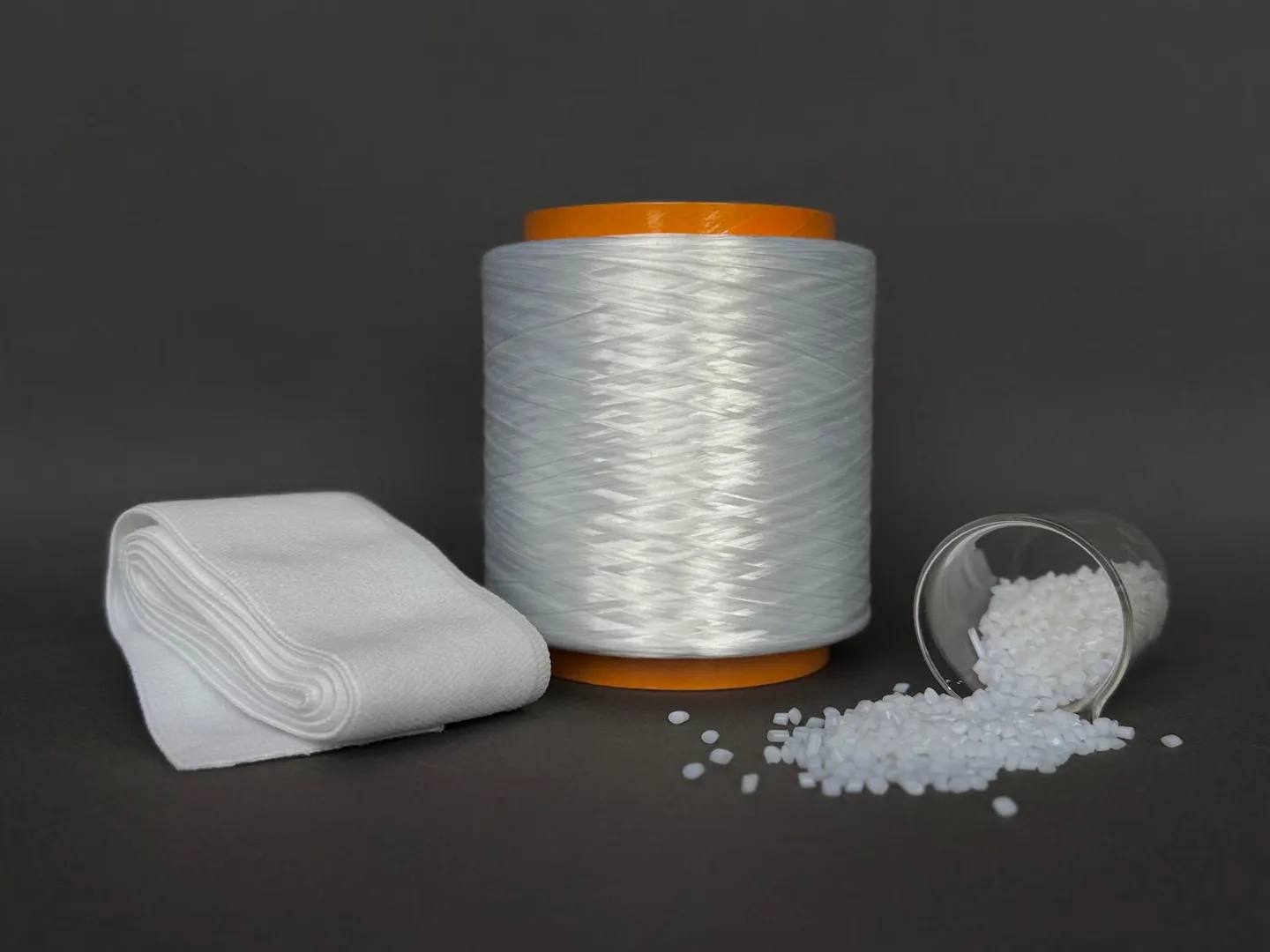
The project team is developing recyclable elastic yarns and textiles based on thermoplastic copolyester elastomers (TPC). These materials also offer high elasticity but, due to their thermoplastic nature, can be melted down, melt-spun, and later thermomechanically recycled. In addition, TPCs are highly compatible with common polyesters such as polyethylene terephthalate (PET), which facilitates their integration into existing recycling processes.
Approach
The project team is examining the entire value chain—from yarn development through textile processing to the recovery of regranulate and its reprocessing into new textiles. An elastic woven tape serves as a textile demonstrator in this process. In addition, the team is developing concepts for the collection and sorting of such textiles so that they can be reliably returned to the circular economy in the future.
Project Consortium
Project Manager / Contact Person: Ricarda Wissel, ricarda.wissel@ita.rwth-aachen.de
Project partners: HOHGARDT GmbH & Co. KG, Envalior Deutschland GmbH, Schill + Seilacher GmbH, Zimmermann GmbH & Co. KG, Boer Group Recycling Solutions GmbH





Funding
Grant Program: DATIpilot
Funding Agency: Federal Ministry of Research, Technology, and Space (BMFTR), as part of the Circular Textiles (CirTex) Innovation Community